

Perimenopause Can Start Earlier Than You Think: What to Watch For
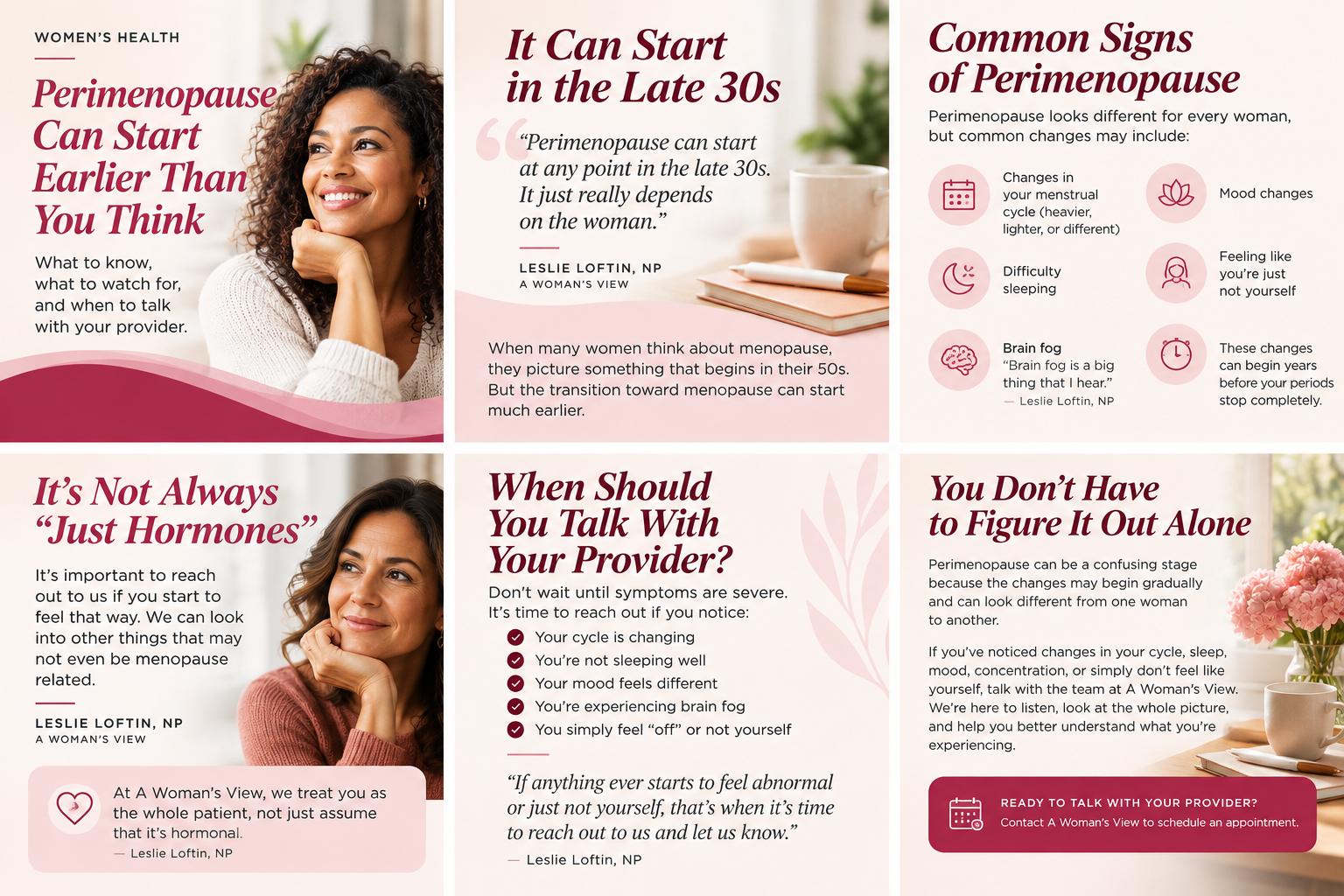
When many women think about menopause, they picture something that begins in their 50s. But the transition toward menopause can start much earlier.
“Perimenopause can start at any point in the late 30s,” says Leslie Loftin, one of our NPs, here at A Woman’s View. “It just really depends on the woman.”
That is one reason it can be helpful to pay attention when your body begins to feel different, even if menopause still seems years away.
What Does Perimenopause Feel Like?
Perimenopause does not look exactly the same for every woman.
For some women, one of the first noticeable changes may be their menstrual cycle. Leslie encourages women to pay attention if their periods begin changing, whether they are becoming heavier, lighter, or simply different from what is normal for them.
Other changes may include mood shifts, difficulty sleeping, or the feeling that you are simply not quite yourself.
“Brain fog is a big thing that I hear,” Leslie says.
These changes can begin well before your final menstrual period. In fact, Leslie notes that women may experience some of these symptoms years before their periods stop completely.
Not Everything Is “Just Hormones”
One of Leslie’s most important messages is that women should not automatically assume every change they experience is caused by perimenopause.
“It’s important to reach out to us if you start to feel that way,” Leslie says. “We can look into other things that may not even be menopause related.”
Changes in sleep, mood, menstrual cycles, concentration, or the way you feel overall may happen during perimenopause, but your provider can also consider whether something else could be contributing to those changes.
At A Woman’s View, the goal is to look beyond a single symptom.
“We want to make sure that we treat you as the whole patient, not just assume that it’s hormonal,” Leslie says.
When Should You Talk With Your Provider?
You do not have to wait until your symptoms become severe or disruptive before bringing them up.
If your cycle is changing, you are not sleeping well, your mood feels different, you are experiencing brain fog, or you simply have the sense that something is off, it is worth having a conversation with your provider.
Leslie puts it simply: “If anything ever starts to feel abnormal or just not yourself, that’s when it’s time to reach out to us and let us know.”
You know what is normal for your body. When that begins to change, asking questions can be an important first step toward understanding what may be happening.
You Don’t Have to Figure It Out Alone
Perimenopause can be a confusing stage because the changes may begin gradually and can look different from one woman to another.
You do not have to determine on your own whether what you are experiencing is related to perimenopause or whether something else may be going on.
If you have noticed changes in your cycle, sleep, mood, concentration, or simply do not feel like yourself, talk with the team at A Woman’s View. We are here to listen, look at the whole picture, and help you better understand what you are experiencing.
Ready to talk with your provider? Contact A Woman’s View to schedule an appointment.
